| Spitfire Training |
Thursday, November 09, 2006
Sunday, November 05, 2006
Defending Our Faith
Advocacy for RH and Catholicism are not mutually exclusive.
Read on...
===================================================
For this priest, sex ‘a good thing,’ Church made it ‘bad’
By Vincent Cabreza
Inquirer, Last updated 07:04am (Mla time) 10/25/2006
Published on page A4 of the October 23, 2006 issue of the Philippine Daily Inquirer
BAGUIO CITY -- There are a handful of Catholic priests in the Philippines who will tell you sex is a "good thing." A few will even admit it's the Church's fault for making sex "a bad thing."
Read on...
===================================================
For this priest, sex ‘a good thing,’ Church made it ‘bad’
By Vincent Cabreza
Inquirer, Last updated 07:04am (Mla time) 10/25/2006
Published on page A4 of the October 23, 2006 issue of the Philippine Daily Inquirer
BAGUIO CITY -- There are a handful of Catholic priests in the Philippines who will tell you sex is a "good thing." A few will even admit it's the Church's fault for making sex "a bad thing."
Teachers and pastors here met one of these outspoken priests last week during a training retreat sponsored by the Institute of Women's Studies that was devoted to gender sensitivity. Some of the participants appeared surprised to hear a priest reveal how the Church had propagated sexism in Philippine society.
Fr. Percy Juan Bacani, a moral theologist and superintendent of high schools operated by the Diocese of Baguio, said the Catholic doctrine on "guilt" had very much eroded Filipinos' appreciation for, and even enjoyment of, sex. The Church, he said, is a male-dominated power center where the female plays a far diminutive role. It is this ideological foundation which explains why Filipino women today are less valued than women of an ancient Filipino culture where they were revered. Women who shine in Catholic societies only achieve their ambition by imbibing the male culture, or by sustaining the myth "that the only good women are virgins," Bacani said.
President ‘man-like’
President Gloria Macapagal-Arroyo, he said, is more “man-like” in her shrewdness at politics. More were surprised when the priest suggested that the devoted turn back to the spiritual nature of indigenous Filipino worship in order to unlearn the Christian dogma that has made some religious Filipinos abhor sex. Bacani cautioned his audience that his lessons about religion and sex were based on “my struggles to be a man in the right way.”
It is an ongoing struggle, he later told the Inquirer.
Click here to read more:
http://newsinfo.inq7.net/inquirerheadlines/nation/view_article.php?article_id=28142
Friday, November 03, 2006
Wednesday, November 01, 2006
MDGs BY 2015
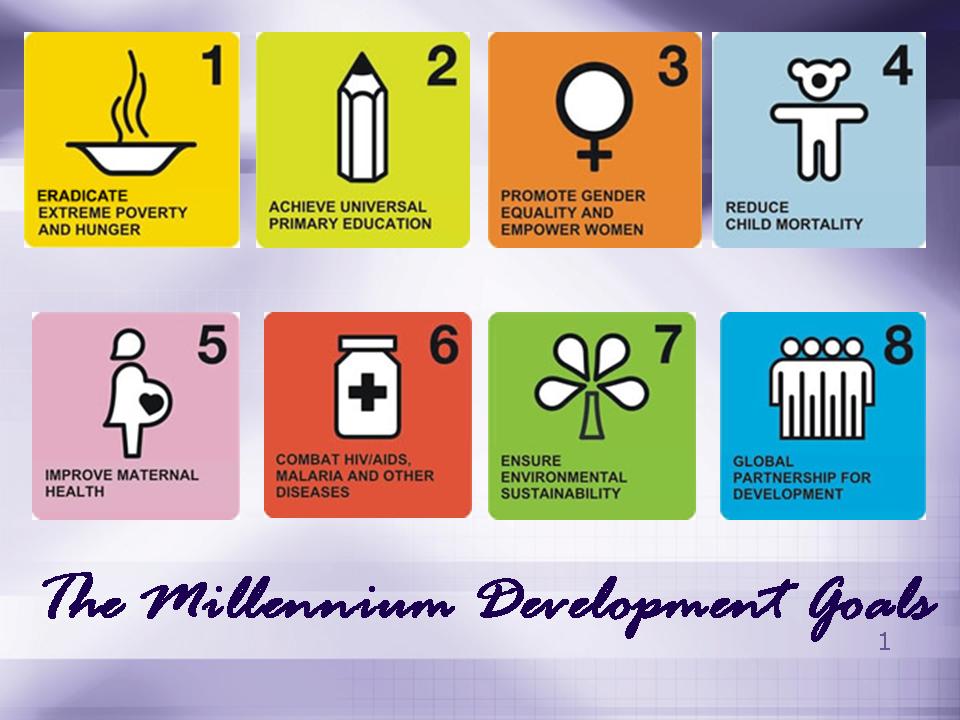
The Millennium Development Goals (MDGs) are eight (8) goals to be achieved by 2015 that respond to the world's main development challenges. The MDGs are drawn from the actions and targets contained in the Millennium Declaration that was adopted by 189 nations-and signed by 147 heads of state and governments (including the Philippines) during the UN Millennium Summit in September 2000.
The 8 MDGs break down into 18 quantifiable targets that are measured by 48 indicators. Click here for a full list of Goals, Targets and Indicators
Goal 1: Eradicate extreme poverty and hunger
Goal 2: Achieve universal primary education
Goal 3: Promote gender equality and empower women
Goal 4: Reduce child mortality
Goal 5: Improve maternal health
Goal 6: Combat HIV/AIDS, malaria and other diseases
Goal 7: Ensure environmental sustainability
Goal 8: Develop a Global Partnership for Development
The fight against poverty does not end after the succesful STAND UP event in various parts of the country and of the world. It was in fact a renewal of the commitment of different nations. From there, the momentum gained in raising the awareness of the people on the MDGs must be channeled to concrete efforts designed to alleviate the conditions of the poor and marginalized sectors of our society. Though several programs and interventions exist in pursuit of these goals, it is crucial that these initiatives be sustained by the government both in the national and local level. As such, the 2007 Local Elections is critical. It bears stressing that the public officials who will be voted into office must be politicians who are working and will continue to work towards the attainment of the MDGs for a better Philippines. That being said, our task is to intensify our advocacy campaign so the people and the politicians will work together towards development.
By telling them that development is about mothers not dying when they give birth, about children surviving their first few years, about getting every child into primary school, making sure that people have access to clean water where they live, then we will have concrete ways of framing the objectives for development.
As UN-Secretary General Kofi Annan said, "It is not in the United Nations that the Millennium Development Goals will be achieved. They have to be achieved in each country by the joint efforts of the Governments and the people ."
/rafs
======================================
The devastating effect of poverty on women (in general):
- If a girl is educated for six years or more, as an adult, her prenatal care, postnatal care and childbirth survival rates will dramatically and consistently improve.
- Educated mothers immunize their children 50 percent more often than mothers who are not educated.
- AIDS spreads twice as quickly among uneducated girls than among girls that have even some schooling.
- The children of a woman with five years of primary school education have a survival rate 40 percent higher than children of women with no education.
- A woman living in sub-Saharan Africa has a 1 in 16 chance of dying in pregnancy. This compares with a 1 in 3,700 risk for a woman from North America.
- Every minute, a woman somewhere dies in pregnancy or childbirth. This adds up to 1,400 women dying each day-an estimated 529,000 each year-from pregnancy-related causes.
- Almost half of births in developing countries take place without the help of a skilled birth attendant.
More than one billion people—one-sixth of the world’s population—live in extreme poverty, lacking the safewater, proper nutrition, basic health care and social services needed to survive. This means a single episode of disease, an ill-timed pregnancy, a drought or a crop-destroying pest can be the difference between life and death. In many of the poorest countries, life expectancy is half of that in the high-income world—40 years instead of 80 years.
The consequences of this poverty reach far beyond the afflicted societies. Poverty, inequality and disease are chief causes of violent conflict, civil war and state failures. A world with extreme poverty is a world of insecurity.
Monday, October 30, 2006
Upcoming Events-World AIDS Day and PopDev Week
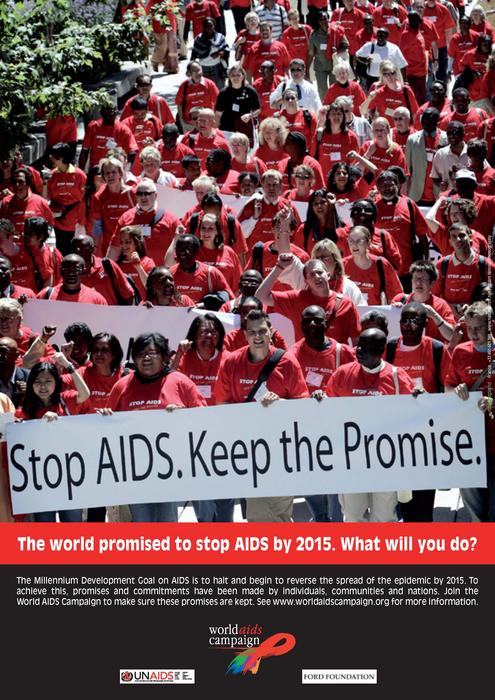 World AIDS Day: 01 December: Stop AIDS. Keep the Promise
To end the pandemic means keeping our promises and commitments in the fight against HIV and AIDS. That is why the World AIDS Campaign (WAC) has chosen the following as its theme from 2005 - 2010: Stop AIDS. Keep the Promise.
The Theme for World AIDS Day 2006 is accountability.
The theme of accountability was developed by the World AIDS Campaign support team based on their ongoing work around World AIDS Day, and based on the outcomes of the London HIV and AIDS Campaigning and Advocacy meeting in February 2005. A number of lessons have been learnt from previous work on World AIDS Day, and far more energy is being invested early in the year to make World AIDS Day 2006 a success. The most significant aspect of this World AIDS Day is the degree to which it has been based around the inputs of a wide range of civil society partners.
Background on the Theme
After two decades of AIDS, we know that with sufficient will and resources we can turn this epidemic around. In June 2001 Heads of State and government representatives gathered for the United Nations General Assembly Special Session on HIV/AIDS (UNGASS). This was the first time a meeting such as this one recognized that AIDS was a global crisis requiring global action.
Since the adoption by 189 countries of the UN Declaration of Commitment on HIV/AIDS, additional promises have been made to strengthen the response to AIDS. The "3 by 5" global target to provide three million people living with HIV and AIDS in resource limited settings with life-prolonging antiretroviral treatment (ART) by the end of 2005 was another important commitment on which the WAC campaigned. This initiative was launched by the World Health Organization and UNAIDS in December 2003 and it was a milestone on the road to universal ART access for all who need it, and a powerful way to complement and accelerate prevention efforts but it was not achieved. Now we have a new one for Universal Access by 2010 agreed by the G8 in July 2005. On top of this are commitments like the Abuja Declaration made by members of the African Union and many more.
Everyone has a role to play in fighting HIV and AIDS and as Kofi Annan, UN Secretary General, said at the UN General Assembly Special Session on HIV/AIDS, "All of us must recognize AIDS as our problem. All of us must make it our priority."
-----------------------------------------------
The Last Week of November is the POPULATION DEVELOPMENT WEEK
Wednesday, October 18, 2006
Snapshots from Marikina STAND UP Event

The energetic emcees during UNFPA hours
in the Stand UP Event in Marikina
in the Stand UP Event in Marikina
Mr. Wilnor Papa (Amnesty International) and
Ms. Cristina "Ging" Cristobal (Forum)
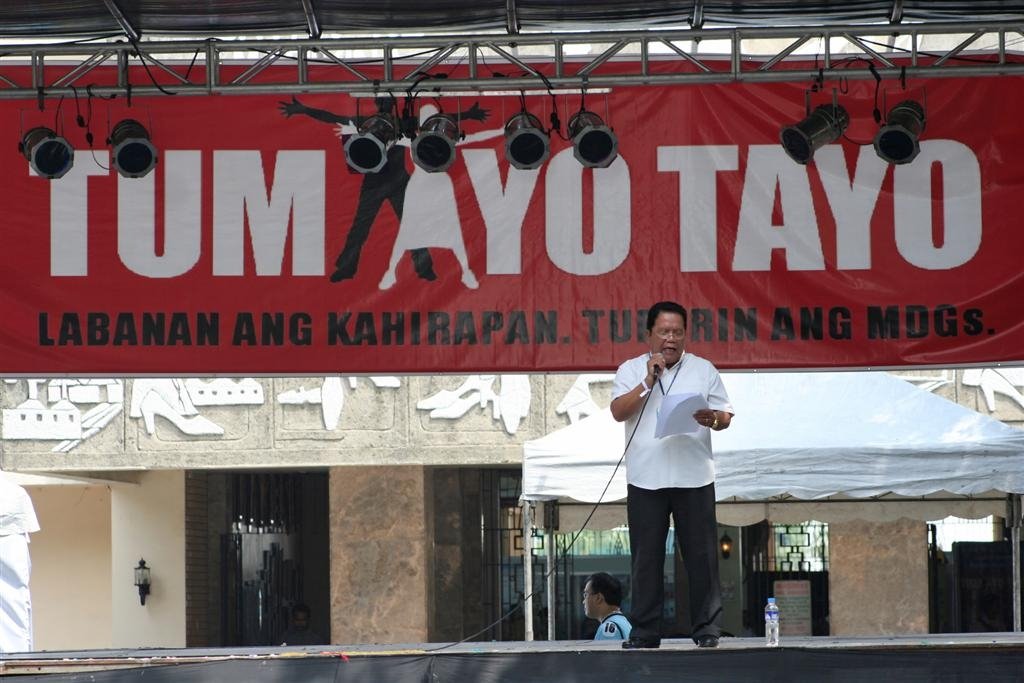
Mr. Tomas Osias, Executive Director of the Commission on Population giving his message
 Time for the Stand Up Pledge
 Part of the crowd that attended the event
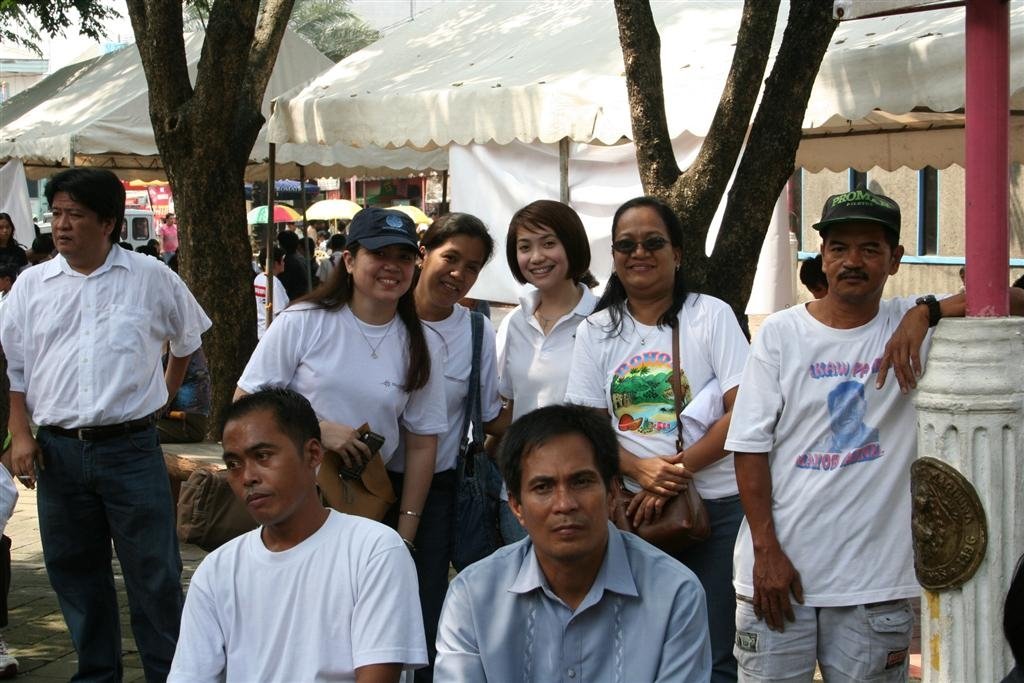
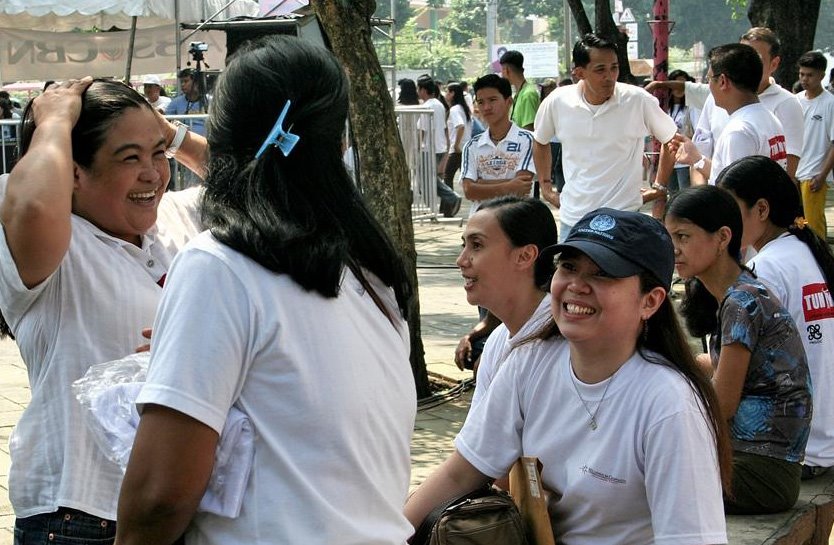
More photos re: the Stand UP Events...
Published in Manila Standard Today, Oct 17, 2006.
Photo taken by Rick M. Reyes
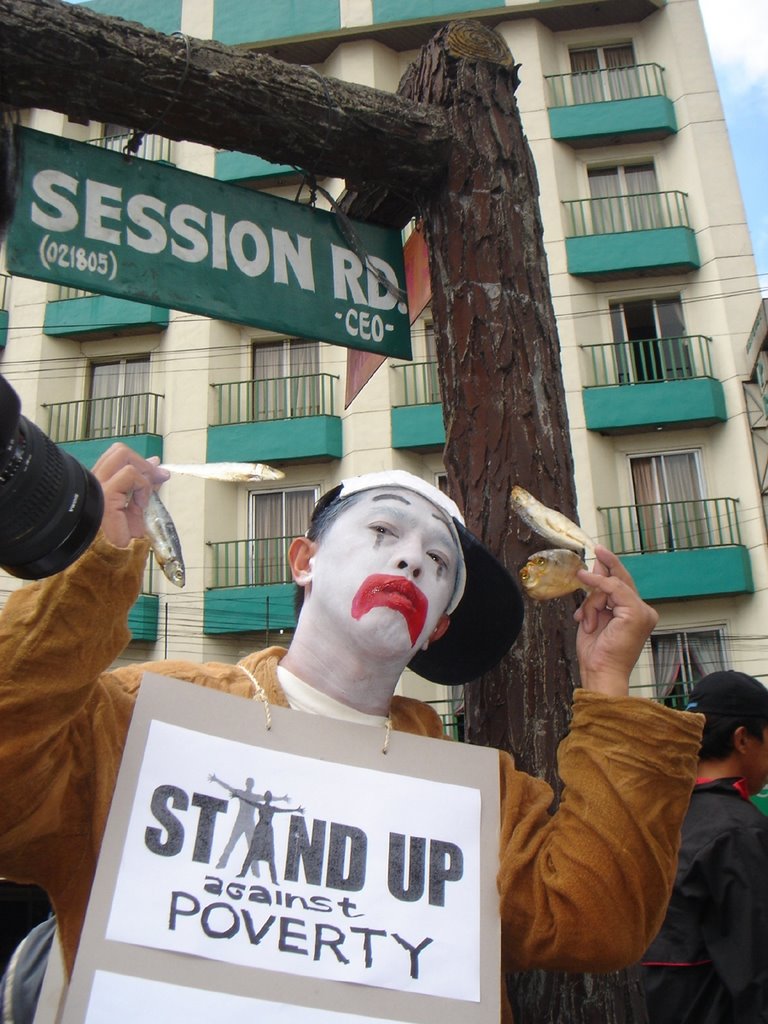
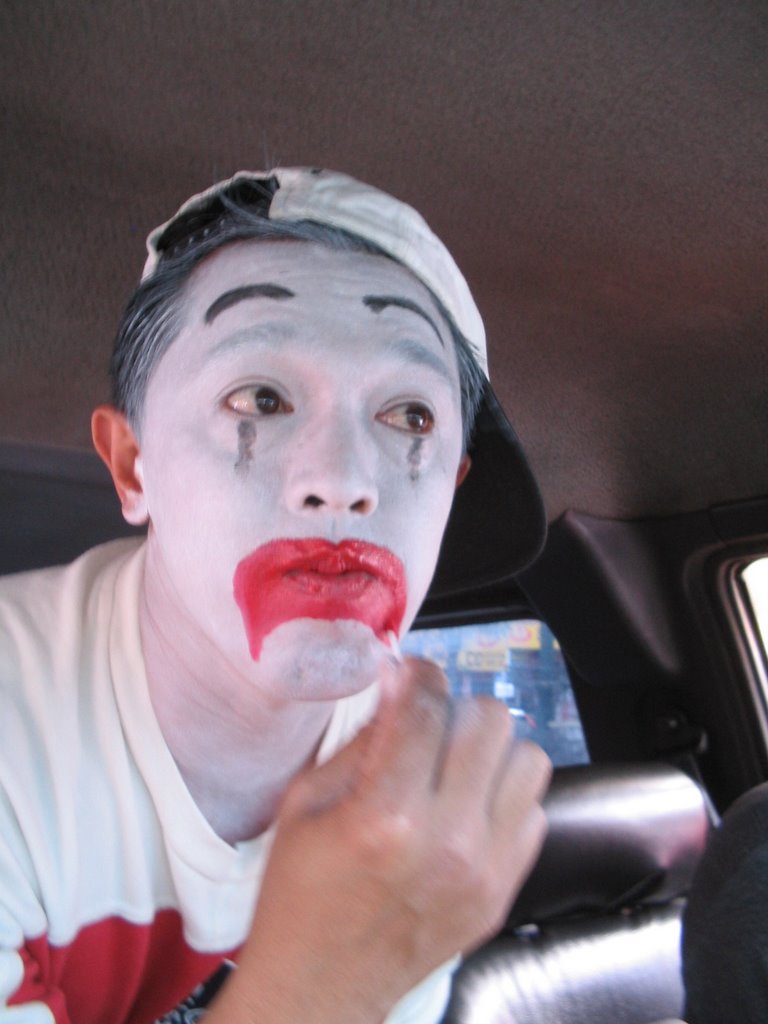
 EV Espiritu (Media Coordinator, Ifugao) put finishing touches on the clown's face (Mao Victa, Manila Bulletin) before hitting session road... (Photo by Rick Reyes)
 The other clown selling condoms.... (Photo by Rick Reyes)
 As UN Secretary-General Kofi Annan puts it: "The Millenium Development Goals (MDGs), particularly the Eradication of Extreme Poverty and Hunger, cannot be achieved if questions of Population and Reproductive Health are not squarely addressed."
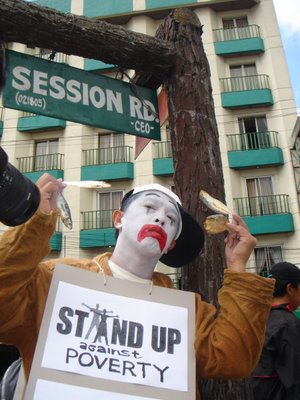
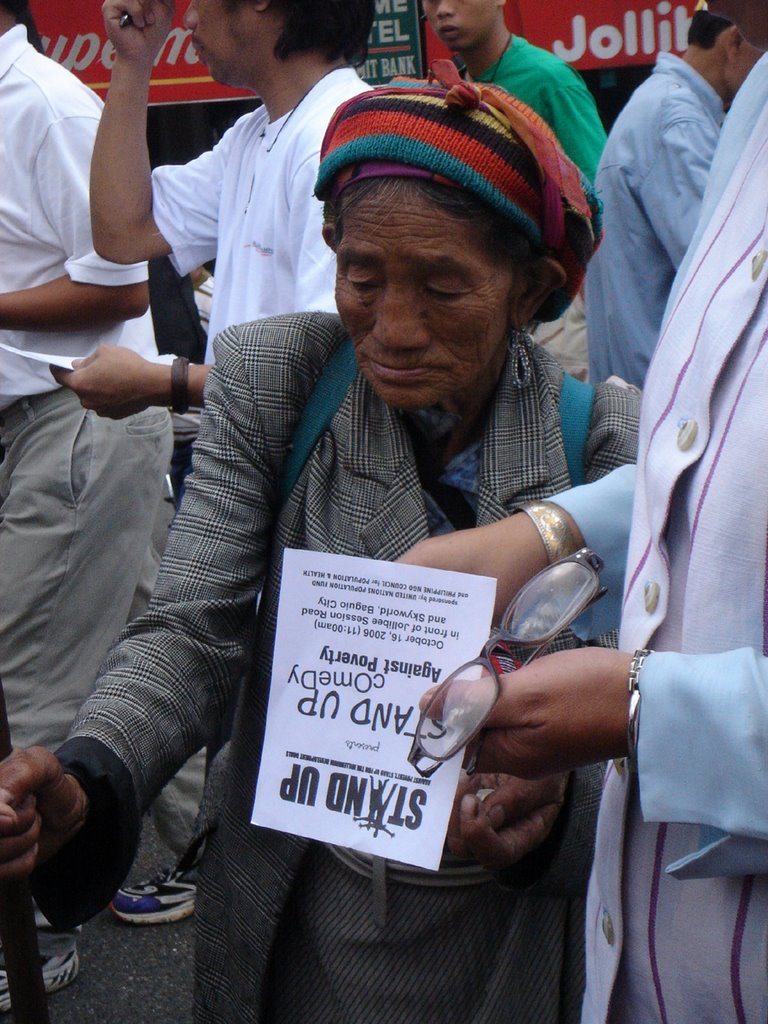 Last two photos by EV Espiritu, PDI-Northern Luzon
 Sultan Kudarat pics by Gina Belmes, Radyo Natin-Isulan
 Photos in Upi shared by Alih Anso, dxUP-FM Maguindanao
Tuesday, October 17, 2006
Snapshots during STAND UP AGAINST POVERTY Initiatives in the areas...
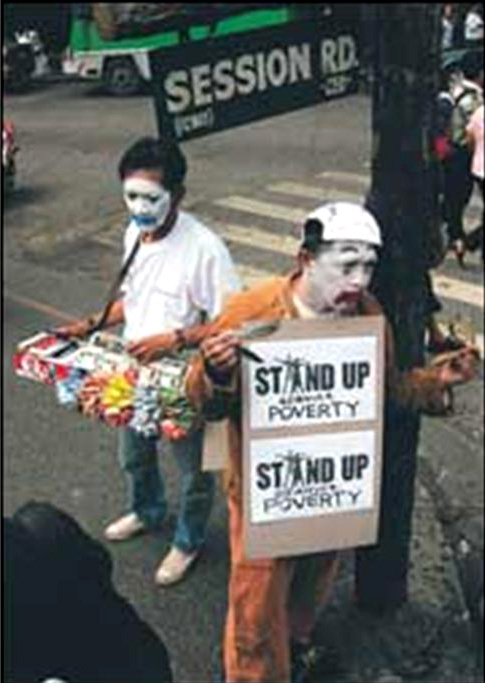 In Baguio City, the Media Advocates from the Cordillera Region
organized their own "Stand UP" event with their
"Stand UP Comedians Against Poverty"
Read the full story by Vincent Cabreza, PDI-Northern Luzon at: http://newsinfo.inq7.net/inquirerheadlines/nation/view_article.php?article_id=27089

Sultan Kudarat Media Advocates, in coordination with
the LGU of Sultan Kudarat held their own
Stand UP event at the New Capitol Building in the Province

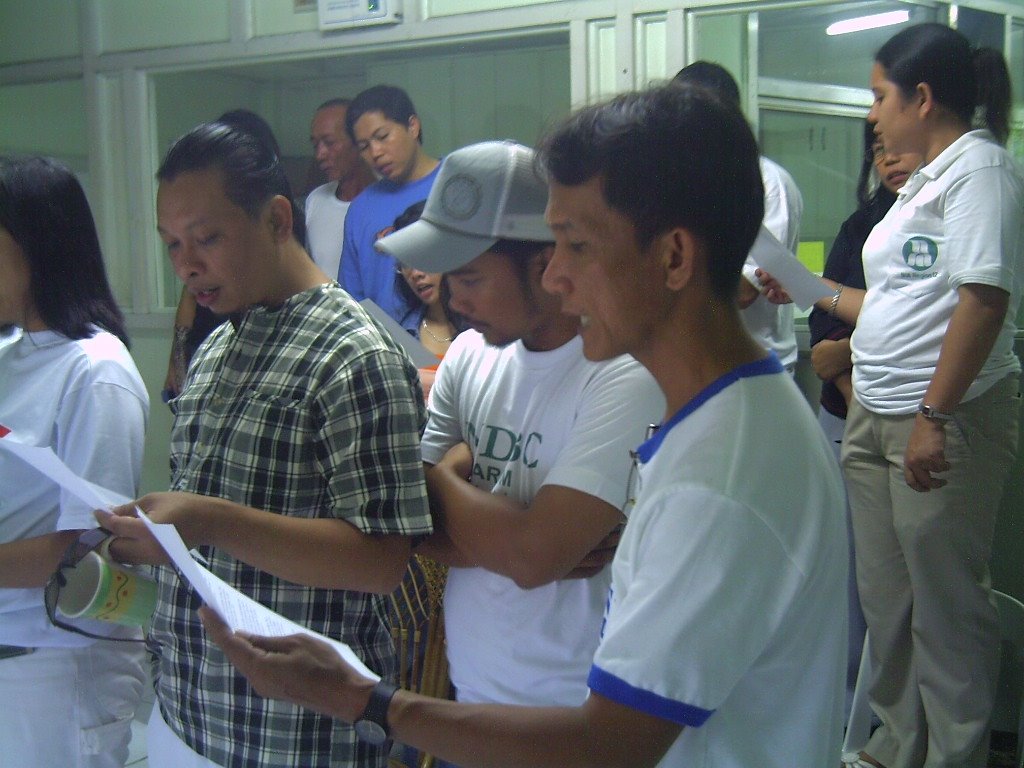 In Cotabato City, Notre Dame Broadcasting Corporation employees
joined the Stand Up activity at 9 a.m., Oct 16, 2006. It was held in their studio, with eighteen (18) employees reciting the pledge. The MDG songs have been played repeatedly throughout the day in both AM and FM radio stations dxMS-AM and dxOL-FM.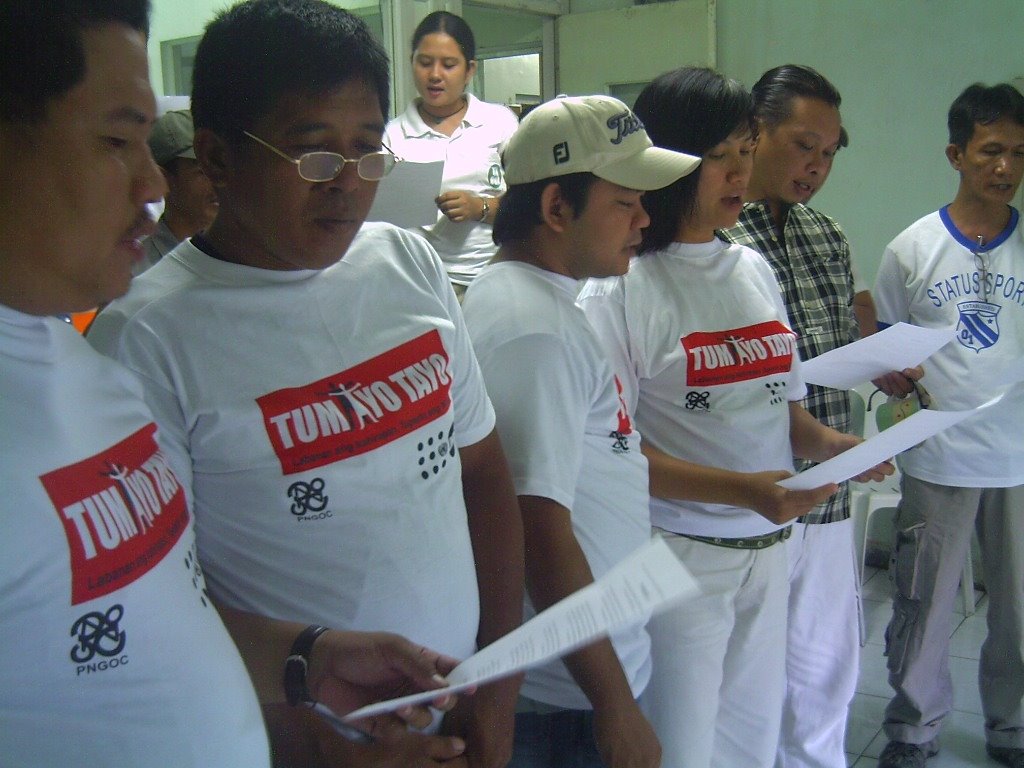
For a glimpse of the STAND UP Event at Upi, Maguindanao, click the following link:
Saturday, October 07, 2006
Stand Up. Be Counted. Act Now.

I. About Stand Up
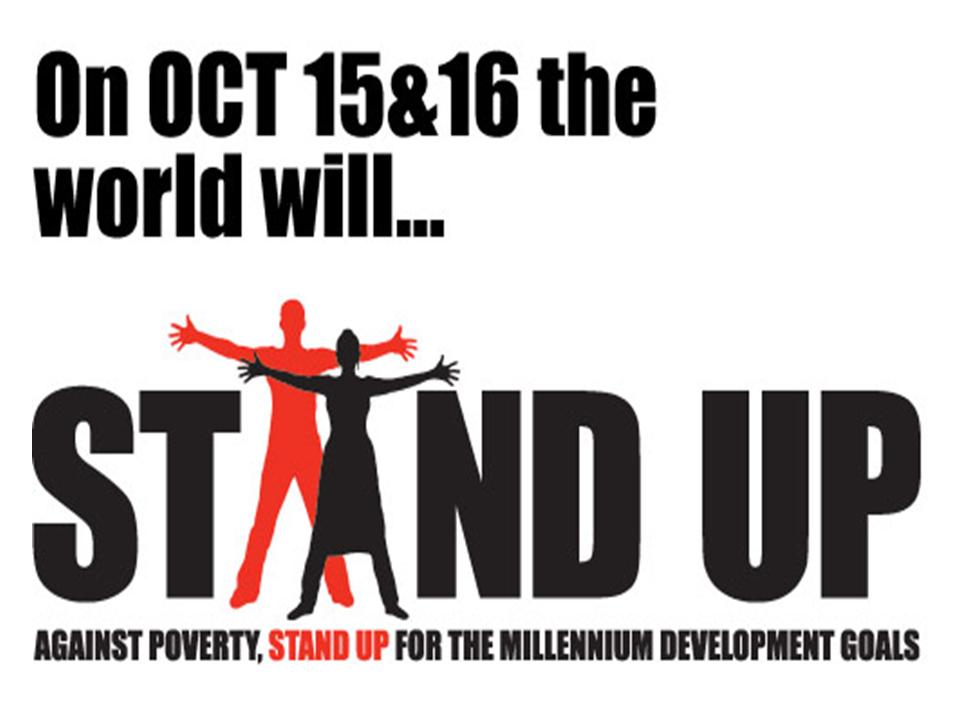
Stand Up is an exciting and innovative global challenge of the Millennium Campaign, which will attempt to set an official Guinness World Record for the most number of people ever to Stand Up Against Poverty on October 15-16, 2006.
Stand Up is a mobilization initiative designed to coincide with global mobilizations around the International Day of Poverty Eradication and the White Band Day of the Global Call to Action Against Poverty.
Stand Up aims to raise awareness of the Millennium Development Goals (MDGs) and publicly demonstrate the growing global support for the achievement of the Goals.
Stand Up is the opportunity for organizations to be part of this global event in support of poverty eradication and the achievement of the MDGs.
It is an occasion to showcase laudable efforts and accomplishments towards the attainment of the MDGs as well as pose the challenge for sustaining and even accelerating the efforts.
II. Tumayo Tayo Pilipinas
Inspired by the idea of this campaign, the United Nations system in the Philippines will use the month of October – recognized as “UN Month” – as a platform for MDG advocacy. UN-led activities are organized throughout the month.
Stand Up is an exciting and innovative global challenge of the Millennium Campaign, which will attempt to set an official Guinness World Record for the most number of people ever to Stand Up Against Poverty on October 15-16, 2006.
Stand Up is a mobilization initiative designed to coincide with global mobilizations around the International Day of Poverty Eradication and the White Band Day of the Global Call to Action Against Poverty.
Stand Up aims to raise awareness of the Millennium Development Goals (MDGs) and publicly demonstrate the growing global support for the achievement of the Goals.
Stand Up is the opportunity for organizations to be part of this global event in support of poverty eradication and the achievement of the MDGs.
It is an occasion to showcase laudable efforts and accomplishments towards the attainment of the MDGs as well as pose the challenge for sustaining and even accelerating the efforts.
II. Tumayo Tayo Pilipinas
Inspired by the idea of this campaign, the United Nations system in the Philippines will use the month of October – recognized as “UN Month” – as a platform for MDG advocacy. UN-led activities are organized throughout the month.
What?
Underpinning the October events is the theme: “Stand Up Against Poverty. Stand Up for Millennium Development Goals”, which capitalizes on the global Stand Up event of the Millennium Campaign.
In the Philippines, the goal is to have at least 1 million Filipinos stand up and be counted from 15-16 October 2006. Simultaneous and parallel events will be organized nation-wide and enrolled to adopt the common logo, theme, slogan and Stand Up moment.
The campaign encourages a large number of national and local partners including people’s organizations, national government, local government units, non-government organizations, the private sector, academe and media to participate.
Some of the events being organized with the National Commission for Culture and Arts (NCCA) and UN – Habitat MDG Resource Cities to date are as follows:
Lead flag-raising ceremony in Malacañang with President Gloria Macapagal-Arroyo and the Office of the United Nations Resident Coordinator;
Simultaneous flag-raising ceremonies in national government offices and public schools nationwide; and
Satellite events in MDG resource cities and events organized by partners will be enrolled to the Stand Up Campaign.
Central Event: MDG Festival
The central event will be a two-day event such as an MDG Festival will have a line-up of cultural shows, concert with local pop bands, performers, artists, dances, and other presentations throughout the event. This will be open to the public and will feature songs from the MDG Album, “Tayo Tayo Rin Sa 2015” will be performed.
RockEd, UN Habitat and partner organizations that are in the field of performing arts and visual arts will take the lead in providing performers and exhibitors for the two-day festival.
When?
The MDG Festival is organized by RockEd Philippines, from 2 p.m. Sunday, 15 October 2006 at till Monday, 16 October 2006. Schedules and programme is subject to change upon further advice.
Where?
The central event will be held at the Marikina City Quadrangle City Hall. Marikina City is one of the 29 MDG resource cities under UN Habitat’s MDG Localization programme.
Who Can Join?
Universities, non-governmental organizations (NGOs), civil society organizations, primary and secondary public schools and other key MDG partners representing the youth sector can join the Festival.
How To Be Counted?
Throughout the festival, the audience shall be counted by standing up all at the same time during key performances within the day. News bits, greetings and official counts from the other Stand Up events around the country will also be flashed from time to time in the Festival venue.
Stand Up Moment and Pledge
All organizations enrolled in the Stand Up Philippines campaign are encouraged to hold a 10-minute Stand Up moment at the beginning of their event in order to be counted as part of the Guinness Record. The 10-minutes will have three steps:
I. Present the Stand Up concept, rationale and objectives - 5 minutes;
II. Recite the Stand Up Pledge - 2 minutes; and
III. Play the MDG video or community singing - 3 minutes.
I. Present the Stand Up concept, rationale and objectives - 5 minutes;
II. Recite the Stand Up Pledge - 2 minutes; and
III. Play the MDG video or community singing - 3 minutes.
Differently-abled people will be counted as long as they are present at the Stand Up moment and can perform an appropriate action of their choice.
What to Wear
In the tradition of white bands symbolizing the global fight against poverty and hunger (MDG#1), participants are encouraged, where possible, to wear white tee-shirts and/or white bands during the Stand Up event you are joining either on October 15 or 16, 2006.
Logo
As part of the local campaign, a Filipinized logo version was developed. This logo is prescribed to be used by all MDG partners. Soft copy of the logo may be downloaded at the website www.millenniumcampaign.ph.
The Filipino translation, “Tumayo Tayo Labanan ang Kahirapan. Tuparin ang MDGs”, conveys the desire to stand and work together, as well as putting a sense of urgency, which is reinforced in the phrase “Tuparin ang MDGs”.
Participating in the global event answers the Filipinos’ need to connect to people and to be part of something big, something greater than the individual – something noble. The central Stand Up event in Metro Manila, with parallel events in other parts of the country, plays on the Filipinos’ penchant for gathering together as a community and is the best avenue for a bandwagon effect to increase the number of people who will be counted for the Guinness Record and raise awareness desired for the MDGs.
Slogan
Organizations may also use the slogan “Stand Up...” or “Tumayo Tayo...” as part of the their event’s title. For instance, Stand Up for Peace. Stand Up for a Better World is being used by the Department of Foreign Affairs (DFA) for the UN week celebration.
This will deliver a unified theme and a synchronized list of activities among MDG partners.
Guinness Guidelines & Requirements
§ All Stand Up actions will be counted between 6 p.m. (EST) Sunday, 15 October to 6 p.m. (EST) Monday, 16 October 2006.
§ People should intentionally stand up from a seated position first (Differently-abled people will be counted as long as they are present at the Stand Up moment and can perform an appropriate action of their choice);
§ All Stand Up actions must be monitored, counted and registered according to the below process that have been verified by Guinness;
§ There should be no duplications in the counting process;
§ Where possible, images and video of the action should be captured and sent with submission;
§ Where non-web forms are used, i.e. fax, to submit information, one independent witness should sign and verify the number of event participants;
§ For participants who are unable to stand at an organized event an alternative virtual stand up can be arranged via text message; and
§ A Guinness adjudicator will be present at the New York office of the Millennium Campaign to oversee the count worldwide.
Images and video of the action, where possible, should be captured and sent to the official website or text to MDG 2948 for Globe and Sun and 3940 for SMART
Tuesday, October 03, 2006



Subscribe to:
Posts (Atom)